Exchange the laptop unit

Before you begin

Icon for electrostatic discharge wrist strapUse approved ESD procedures to prevent damage.

Attention:
  • This procedure is not a stand-alone procedure. Customer disruption and damage to the hardware might occur when microcode and power boundaries are not in the proper conditions for this service action.
  • If a serviceable event FRU repair directed you to this procedure, the microcode and power boundaries are already set.
  • If a serviceable event FRU repair did not direct you to this procedure, see MAP1230 Replace a FRU without using a serviceable event.
Notes:
  • All the cables and FRUs to be removed must be uniquely identified so they can be reinstalled correctly.
  • If an installed earthquake resistance kit prevents you from accessing this FRU, refer to MAP1600.

Remove the laptop unit

Procedure

  1. If this storage facility does not have a second laptop unit connected and functioning, the customer will not have access to manage their storage while you perform this procedure. Ensure they are aware of this.
  2. Shut down the laptop unit. See MAP6640 Shutting down, restarting, and logging off the management console for more information.
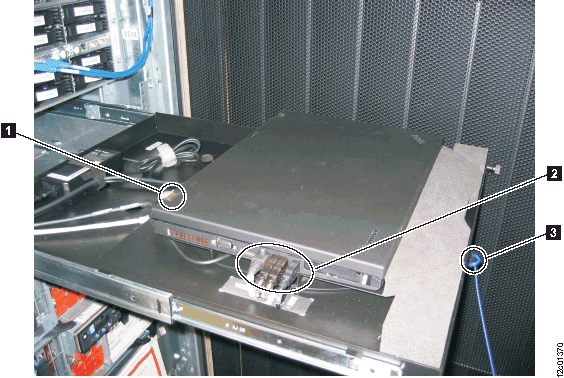
  3. At the laptop unit, disconnect the power Callout label 1 and communication Callout label 2 cables.
    Figure 1. Laptop with cable connected
    Laptop with cable connected
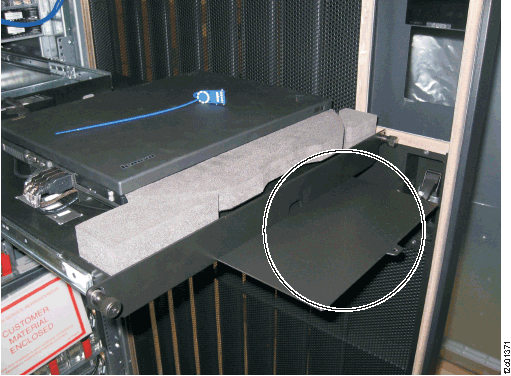
  4. Break the theft awareness seal Callout label 3 (shown in Figure 1). Then, slide out the bottom plate (shown in Figure 2).
    Figure 2. Laptop bottom access security plate
    Laptop bottom access security plate
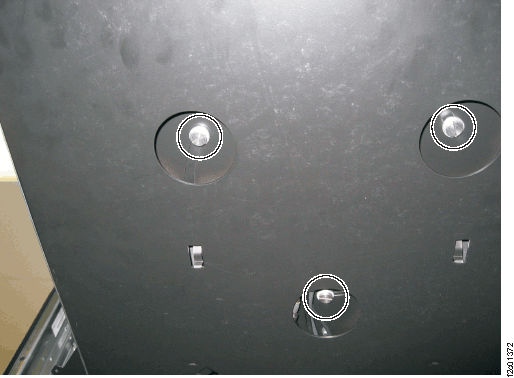
  5. From beneath the laptop unit tray, remove the three retaining screws securing the laptop unit rotating tray assembly.
    Figure 3. Bottom view of laptop swivel assembly retaining screws
    Bottom view of laptop swivel assembly retaining screws
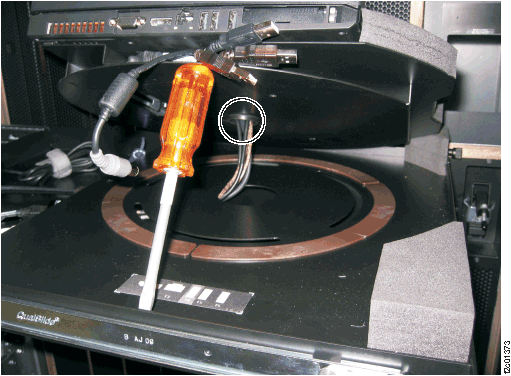
  6. Lift up the laptop unit rotating tray assembly and feed the cables through the pivot hole so the assembly can be removed from the rack.
    Figure 4. Laptop unit swivel assembly lifted up, cables still routed
    Laptop unit swivel assembly lifted up, cables still routed
  7. Set the laptop unit rotating tray assembly on a flat surface for further disassembly.
    Figure 5. Laptop assembly on a flat surface
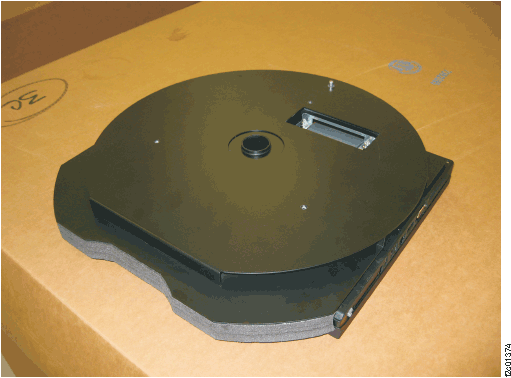
    Laptop assembly on a flat surface
  8. Remove the retaining bracket nuts.
    Figure 6. Retaining bracket nuts
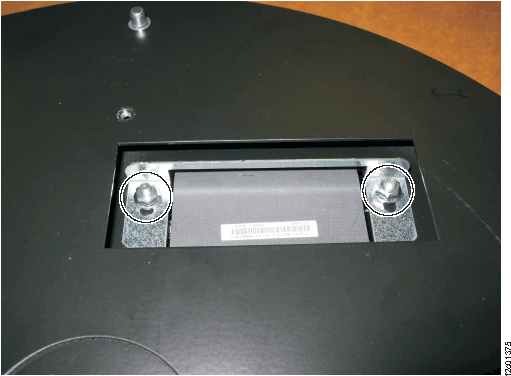
    Retaining bracket nuts
  9. Separate the laptop unit from the laptop rotating tray assembly. There are two patches of hook-and-loop fastener that must be gently separated.
    Figure 7. Laptop separated from swivel assembly
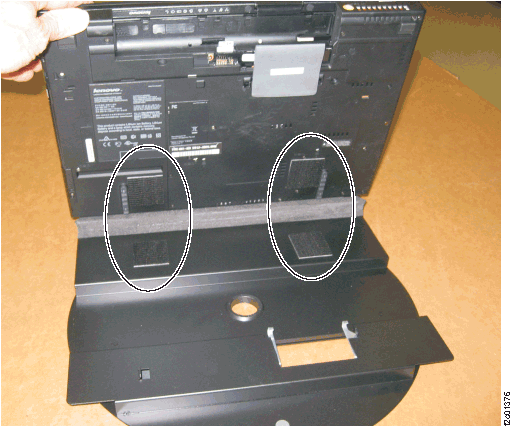
    Laptop separated from laptop swivel assembly
  10. With the laptop unit sitting with the bottom side facing up, remove the laptop unit automatic power-on card
    Figure 8. Laptop automatic power-on card
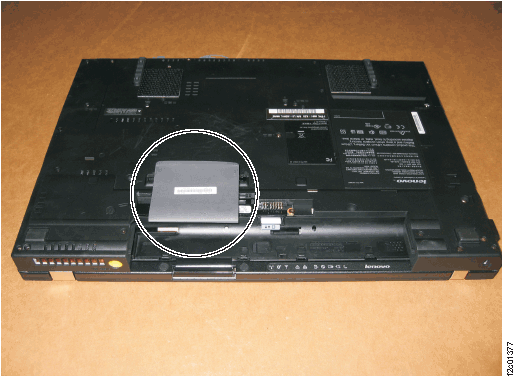
    Laptop automatic power-on card

Install the laptop unit

Procedure

  1. Move parts from the old laptop to the new laptop.
    1. The hard drive, DVD-RAM drive, and memory DIMM from the old laptop unit need to be moved to the new laptop unit. The new laptop FRU typically will not include these. The old hard drive already has working and configured code.
    2. Reference the IBM® DS8000® series Service Documents CDROM that came with the installation shipment group. It should be stored in the front upper left open compartment of Rack-1. Start the CD and open the laptop unit service documentation PDF.
  2. The new laptop unit needs the hook-and-loop fastener strips installed on the bottom.
    1. The laptop unit FRU kit includes hook-and-loop fastener material.
    2. Reference the old laptop and apply the hook-and-loop fasteners to the new laptop in the same locations.
  3. Physically install the new laptop unit in the rack, and ensure all cables are properly connected.
    Figure 9. Ethernet and USB connectors W500 laptop unit
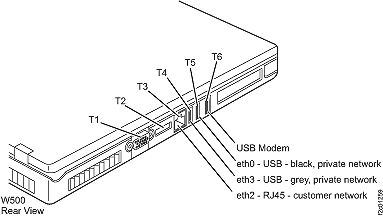
    Ethernet and USB connectors W500 laptop unit
  4. Power the laptop unit on and wait for the login screen. Does the login screen display?
  5. Test the laptop unit to ensure all connections are functioning:
    1. Use the network topology tool to ensure the gray and black private network connections are functioning. See MAP7001 Using the network topology tool for more information.
    2. Display open serviceable events needing repair. If there are serviceable events related to this HMC or private network timeout problems created before or during the time you replaced this laptop unit, close them now.
    3. Run the storage facility status (end of call) option. See MAP1100 View storage facility state (end of call) for more information.
    4. If the customer allows a phone line connection, test the modem. Select Service Management > Manage Outbound Connectivity > Configure > Local Modem > Test.
    5. If the customer allows VPN connections, test it. Select Service Management > Manage Outbound Connectivity > Internet VPN > Test . If the test fails, see MAP1301 Isolating Call Home/remote services failure.
    6. Ask the customer to test the access of the application or method that they will use to connect to the DS8000 Storage Manager in the laptop unit.